Pages

Sunday, March 11, 2012

How to Avoid Abdominal Separation During Pregnancy

Diastasis recti-Abdominal Separation
How can I reduce and minimize this pregnancy condition?
Diastasis recti-

Diastasis recti is a condition where the two right and left sides of the rectus abdominis (your "six-pack" muscle) spreads apart at the body's mid-line (the linea alba). Separation occurs in response to your uterus pushing against the abdominal wall and pregnancy hormones which soften connective tissue. Separation can occur at any time in the last half of pregnancy but is most problematic after pregnancy when the abdominal wall is weak, when there is no longer a baby inside to aid support. Premature separation can also be seen as early as 20 weeks.

There are varying degrees of this condition during pregnancy
Factors during pregnancy that can cause premature separation:
Poor Posture
Daily Activities
Incorrect Exercise
Multiple Pregnancies
Subsequent pregnancies
(pregnancies too close together-) when the muscles have not returned back to their pre pregnancy strength or closure


What to do
If you want to reduce your diastasis then you 1st need to address the things you do daily. Poor posture is held over numerous hours and days and daily activities can also be done for many hours. Anything you do over a long period of time will increase this condition very quickly.

Incorrect Exercise during Pregnancy
Exercise in the gym is completed in minutes and we can easily avoid exercises that increase separation if we know what they are. All frontal Planks on the swiss ball or on the floor, full or kneeling press ups should be avoided during second and third Tri-mesters and more suitable core strength exercises should be done.
This photo was taken for this article: FRONT PLANK: As you can see there is increased pressure downwards regardless of how strong the abdominal muscles were prior to pregnancy
More information on the correct exercise to do during your pregnancy check out my website: http://pregnancyexercise.co.nz

Poor Pre & Post Pregnancy Posture
Poor Posture can be harder to correct. Some of us may have had poor posture for many years.
Sway back posture is the main culprit of premature separation. Prior to pregnancy in a sway back posture the core and gluteus muscles along with the mid trapezius in the middle back are long and weak. This incorrect posture pushes the hips and tummy forward, weakening the abdominal muscles further pre & post pregnancy.
Sway Back Posture: Post pregnancy-long and weak abdominal muscles, hips and tummy pushing forward

If poor posture is not addressed and continues during pregnancy lower back pain is inevitable and increased separation will be caused due to the abdominal weakness and continued pushing forward of the uterus. Specific pregnancy strength and postural correction exercise are what is needed.
You need to check your own posture, as you can make the changes you need to today. Link: Pregnancy Posture

Daily Activity:
Possibly one of the worse daily activities that will increase separation is pushing a buggy incorrectly. Many of us will push a buggy several hours during the week!
Decrease weight if possible especially if walking up hill, I would always ask the oldest child to get out and walk if and when possible.
In this photograph this position you are leaning too far forward and rely on the buggy for support not your own muscles-your core strength, there is also alot of upper body tension through the neck and shoulders. In this incorrect pushing position you are pushing down from your tummy increasing separation.
In the correct position your hips are tucked under and you are supporting yourself as opposed to the other way round. You can use your glutes and leg muscles instead of your lower back muscles.There is no upper body tension.

Multiple and Subsequent Pregnancies
Subsequent pregnancies that are close together should not mean that you cannot prevent premature or an increased diastasis recti and just because you are carrying a multiple pregnancy doesn’t mean you will have increased separation. It is paramount that you close the separation after each pregnancy.

By addressing the factors I have mentioned and following a pre or post pregnancy program before commencing a pregnancy diastasis recti is reduced to a minimum therefore increasing your recovery and helping you get rid of your baby tummy quickly post birth.


Choose an exercise program during your pregnancy that will prevent diastasis! : Join our Fit2BirthMum Program today! Many more posts on diastasis on our main website http://pregnancyexercise.co.nz 

Tuesday, January 31, 2012

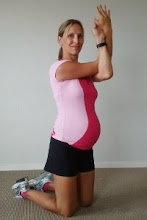
How to Turn a Breech, Posterior or Transverse Baby


There are many ways you can help turn a baby into the optimal position for birth. These exercises and positions have worked for me with 3 of my pregnancies and for many of my clients.
Be patient do the Exercises for at least 10-14 days. If your baby is still in a poor birthing position at 36 weeks I would suggest Accupuncture. I also have a blog post on this site which includes more exercises to do and positions to avoid http://positivelypregnant-mummytrainer.blogspot.co.nz/2011/04/few-tips-on-how-to-improve-you-babies.html

Please Comment on this post, I love hearing all your feedback

Friday, January 20, 2012

Exercising During a Twin Pregnancy

A Clients Story

A client of mine experienced a pain free twin pregnancy and recovered quickly enough to start a specific corrective post pregnancy exercise program just 2 weeks after a ‘C’ section.

‘B’ my client for short started training with me 2-3 times a week from 5 weeks pregnant. After an initial movement, flexibility assessment and postural analysis I knew what we had to focus on to make sure she could stay fit, strong, pain free and healthy during her pregnancy.

I developed an exercise program focusing on strengthening her gluteus maximus and gluteus medius muscles and made sure B was avoiding standing on one hip. This is something that many women do and ‘B’ at 6ft would always try to lower herself be leaning on one hip often. Many females do this and this can be one of the main reasons why so many women suffer back and hip pain during their pregnancy. Read more on reducing lower back and hip pain: http://positivelypregnant-mummytrainer.blogspot.com/2011/06/are-you-suffering-from-hip-and-lower.html

It was at 6 weeks when B was shocked to find out that she was carrying twins. It took a few weeks for that surprise to sink in. It now became even more important that B continued her regular exercise program as carrying a multi pregnancy puts many extra strains on the body. (Read my article: How to exercise carrying a multiple pregnancyhttp://pregnancyexercise.co.nz/information/pregnancy/can-i-exercise-carrying-a-multiple-pregnancy )
B was incredibly lucky; she had minimal sickness and tiredness during weeks 6-12 and this was her 3rd pregnancy!She managed to continue with her exercise program throughout this testing 1st Tri-Mester. Apart from suffering from restless leg syndrome from 16+ weeks, which did get worse when she had a week off exercise. This was a pregnancy free from any complications.


Exercise:
During the 1st Tri-Mester B would do 3 gym sessions a week with me and my pregnancy exercise group-Positively Pregnant she would also walk. B also continued to do this through weeks 14-26. It was around week’s 26-27 that her lower back started aching. This was quickly reduced with a simple change in posture and more focus on 2 exercises. From weeks 28 B would just train 3 times a week in the gym with the group.
B continued to train right up to 39 weeks with me, she had no muscular aches and pains, could still walk normally and looked absolutely fantastic.

Birth
B is scheduled for a ‘C’ section as one of the twins is breech and blocking the other from pushing down into the canal, after 2 prior vaginal births this is new territory for B. Pictured below at 38.5 weeks
Congratulations!
The twins 1 boy and 1 girl were born November 1st the boy weighed a whopping 9.4lbs and the girl was 7lb 3. One of the biggest twin boys her Obstetrician had ever delivered!

B recovered very fast enough for me to check her diastasis recti (abdominal separation) and muscle activation just 2 weeks after the C section and I could set her a post pregnancy re-hab program to follow at home. B was back in the gym just 4 weeks post looking and feeling great.

If you are carrying twins you too can exercise during your entire pregnancy and be completely pain free, providing you have no medical risks. Make sure if you do want to exercise during your pregnancy that you get professional advice and consult with a pre and post natal exercise specialist.

You can purchase a Post Pregnancy 12 week exercise program from my site. It is safe and effective and you can start the exercise program 1-4 weeks after birth http://pregnancyexercise.co.nz

Saturday, January 14, 2012

3 Exercises you can do on a Bean Bag to Relax and to Turn baby into Optimal Birthing Position

Monday, December 5, 2011

The Importance of Good Posture during Pregnancy

During your Pregnancy it is crucial from the start that you try to develop and or maintain good posture.

Good posture is beneficial for both you and your baby. Here are some of the key benefits

• Gives baby more room to grow and move
• Reduces lower back, shoulder, neck and pelvis pain
• Increases recovery post birth
• Reduces diastasis recti-abdominal separation


Good posture increases the room your baby has to grow and develop. This puts less strain on you and you will carry your pregnancy far easier. Poor posture decreases the room which baby has to move and will cause excess tightening of some muscle groups causing posture to worsen. A good example of poor posture leading to less room is rounded shoulders and weak core muscles.

An Example of Good Posture in late Pregnancy 38 weeks with Twins

Poor posture will increase lower back and hip pain during pregnancy. Lower back pain can be caused by excessive lumber lordosis. This puts extra strain on the lower back muscles whilst weakening the gluteus (butt) muscles and over tightening the Quadriceps muscles (your thighs).


Excessive arching of the lower back as seen in the example will lead to lower back aches and pains. This posture will also increase premature diastasis recti-abdominal separation.

How will good posture increase my recovery post birth?
Once you have good posture your body is functioning correctly and you will have optimal muscle balance. Good muscle balance and strength increases recovery as poor posture in pregnancy generally worsens post birth, increasing the chances of injury and developing muscle aches and pains.

Diastasis recti- abdominal separation generally occurs during the 3rd tri-mester but in 2nd and multiple pregnancies it can occur earlier. If you continually sway your back and or stick your tummy out, this will put pressure on the weakened abdominal muscles earlier in the pregnancy causing premature separation.

What you need to do:-

You need to think about your posture daily and you need to make the changes to correct your own posture.
Good and Poor Posture at 21 weeks, which one are you? You can change it!

Have a look at yourself side on and then front on in a mirror and assess your posture.
Side View:
Your Cheekbones, shoulder and hip should line up in a vertical line
Do you feel balanced?
Are you placing more body weight towards your toes?
Have you got excessive lumber lordosis?

Front View:
Are your shoulders and hips parallel?
Is one hip or one shoulder higher than the other?
Are you standing with more weight on one leg?

If you need to correct any postural issues you need to address this asap and think about your posture frequently. You may even need a corrective exercise trainer or physio to help, especially if you already have aches and pains.The pregnancy programs that I sell on my website cover postural pregnancy exercises http://pregnancyexercise.co.nz

Make adjustments to your posture as your pregnancy progress's. Make changes daily and try to think about how you are standing and sitting.

Here are a few Good Posture tips:
Lift your chest up
Look forward
Imagine you are being pulled upwards from your head by a piece of string
Tilt your hips underneath you
Avoid sitting with crossed legs
Avoid standing on one hip or weight on one side
Avoid carrying small children on the same side

Good posture is good for you and great for your pregnancy

Friday, November 4, 2011

Get to know your Babies Movements during your Pregnancy

As soon as you feel your baby’s first movements as exciting and amazing as it is try to consciously track its movements.


Get to know the times when you feel your baby move and where you feel the movements.
I have noticed through all my pregnancies that babies tend to move well and frequently for 2-3 days and then have a day or two when they rest.

If you know how and when your baby moves you will notice quickly if there has been less movement than normal, record it and let your L.M.C know quickly if you think something may be wrong.

Try to notice where you feel most of your babies movements note were and how they may be lying. I knew straight away when my 1st baby moved out of my pelvis and lay transverse and I also knew that my second baby was breech before the midwife knew.

It was also possible because I knew how they were both lying for me to turn them into the correct position.

Movements can be felt from as early as 14-15 weeks and as late as 23 weeks. How you feel your baby movements may differ each pregnancy. The amount of amniotic fluid and the placement of your placenta will affect how you feel and track your baby's movements. It is easier to feel movement’s earlier if your placenta is anterior and you have less fluid.

By tracking your baby's movements you will know your pregnancy and your baby!

Monday, October 31, 2011

Latest Survey results: Percentage of Natural Births Versus C Sections

In my latest Survey I asked the question “What type of Birth did you have?”

I posed this question on my facebook page: Pregnancy Exercise October 2011
I was astounded by the response 2336 votes in 6 days; I was also very surprised by the results, yet they do seem to follow recent global survey results.

It’s a pity I couldn’t go through each individual vote to get an idea on which country everyone gave birth in.

Results Overall:
Vaginal deliveries
50% gave birth naturally (small percentage delivered at home- less than 1%)

A further 3% just required gas

16% had a vaginal delivery with drugs which included epidurals out of these 4.5% were induced.

Total vaginal deliveries 69%

C sections
31% had C sections of which:
24% Emergency Sections included 1.6% determined “failure to progress”
3.6% Elective
3.4% High Risk C sections including 1.5% due to Breech babies

It would be great if we could see the vaginal births rise up to 80% in total. I am sure with further education this is not too great a challenge. I believe far too many women believe that a natural birth is not possible without intervention yet looking at the results 1 in every 2 women do.

We can sometimes have far too many unnecessary interventions prior to labour and birth. We see women who are often rushed during their labours once in hospital and can be given time limits as to how long they have to push their baby out.

Hospitals do not want to see 24 hour + labours they need the rooms.

Women are starting to see and feel the benefits of exercise and staying healthy and strong during their pregnancies. The fitter you are helps you cope much better with the demands of any labour. This in itself can reduce the amount of intervention. With professionals now advising exercise during pregnancy this may help with statistics.

Medical interventions are needed in some cases at the end of the day we want a healthy baby delivered but do women really have to be subjected to endless drugs and machines whilst giving birth which in many cases are unnecessary.

I would love to hear all your views and thoughts on the results of my survey,